By Michael R. Grigsby, Editor | Somerset-Pulaski Advocate
"What Doth Hinder Me?"
Answering the Bible's Call to Baptism
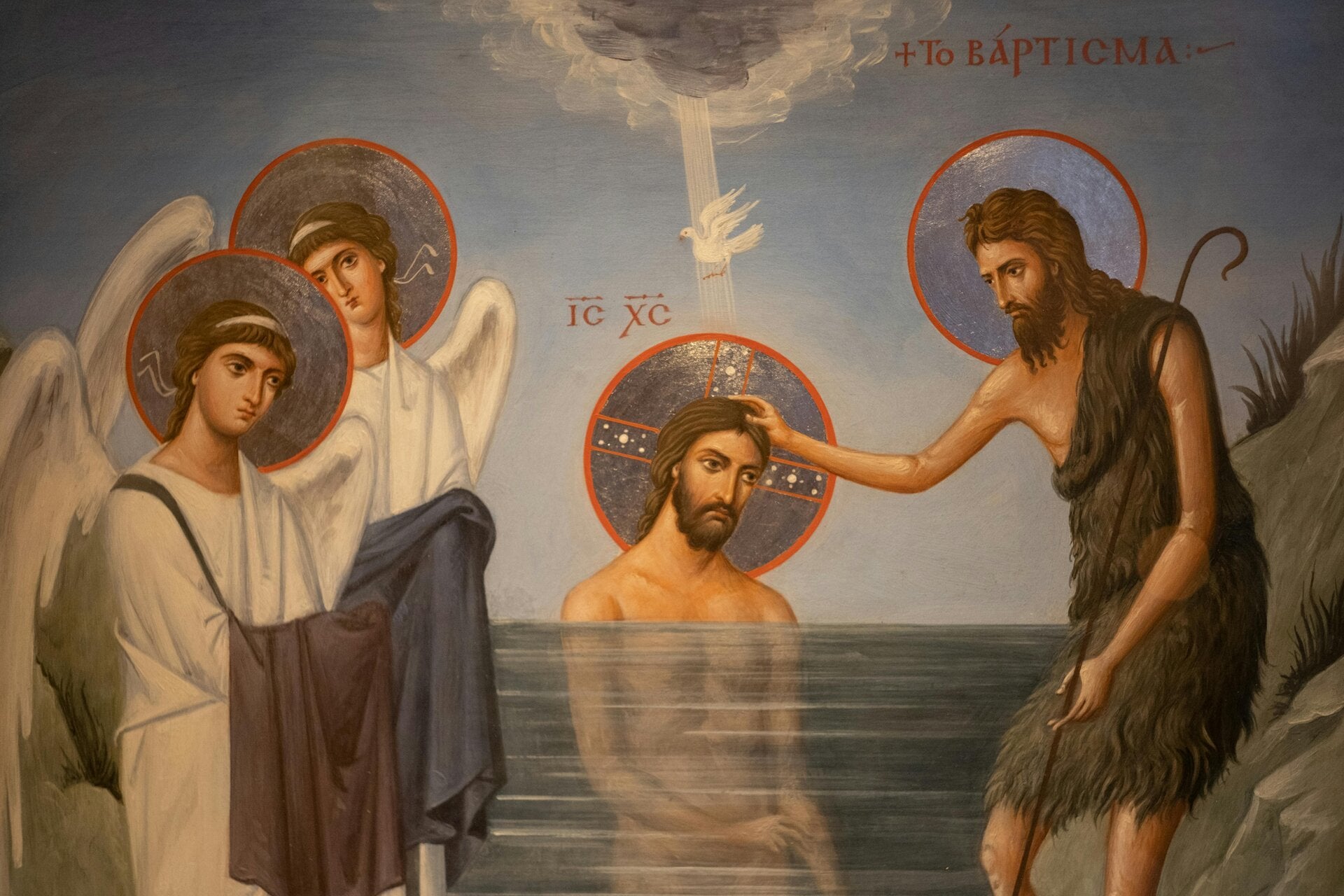
(C) 2025 Ron Lach / Pexels,All Rights Reserved.
Why should you be baptized? Is it a sacred command, necessary for salvation, or just an outdated ritual? If it is necessary, who has the authority to perform it? And how must it be done? In a world of shifting doctrines and denominational confusion, no topic is more fundamental—or more debated—than baptism. Some see it as a legalistic requirement, while others dismiss it as unnecessary. Some baptize infants by sprinkling; others insist on immersion for adults. These are not trivial questions. This is a matter of obedience, salvation, and the very foundation of our faith. Can we sort through the confusion of human tradition and find the clear, simple truth? The answer is a resounding yes. But to do so, we must be willing to set aside preconceived notions and turn humbly to the only source that matters: the inspired Word of God.
The Doctrine of Baptisms: A Foundation of Faith
The modern world may treat baptism as optional, but the Bible lists it as one of the "first principles" of our walk with God. The Apostle Paul, writing in the book of Hebrews, commands believers to move beyond these foundational truths, but in doing so, he names them:
"Therefore leaving the principles of the doctrine of Christ, let us go on unto perfection; not laying again the foundation of repentance from dead works, and of faith toward God, Of the doctrine of baptisms, and of laying on of hands, and of resurrection of the dead, and of eternal judgment." (Hebrews 6:1–2)
Baptism is not an accessory; it is part of the very foundation of Christian faith. But what does it mean? The English word "baptize" comes directly from the Greek word baptizó, which means "to dip," "to sink," or "to submerge." The word itself defines the method. This is not a sprinkling of water or a symbolic pouring. The very meaning of the word is to be fully immersed. We see a clear, literal example of this in the book of Acts, when Philip preached the gospel to a traveling Ethiopian eunuch.
"And the eunuch said, See, here is water; what doth hinder me to be baptized? And Philip said, If thou believest with all thine heart, thou mayest. And he answered and said, I believe that Jesus Christ is the Son of God. And he commanded the chariot to stand still: and they went down both into the water, both Philip and the eunuch; and he baptized him. And when they were come up out of the water, the Spirit of the Lord caught away Philip..." (Acts 8:36–39)
The scripture is plain. They went "down into" the water, and they came "up out of" the water. This was total immersion. But why is this method so important? Because the method is the message.
A Burial and a Birth: The Symbolism of Immersion
Baptism by immersion is a profound and beautiful picture of the most important event in a Christian’s life: death and resurrection. It is a physical act that proclaims a deep spiritual truth. At its core, baptism symbolizes a burial.
"Know ye not, that so many of us as were baptized into Jesus Christ were baptized into his death?" (Romans 6:3)
When we go down under that water, we are figuratively dying. We are burying the "old man"—our past life of sin, our worldly habits, our selfish nature. We are acknowledging that our old self has been judged and deserves death. But we do not stay there. Just as Christ was raised from the tomb, we are raised up out of that watery grave to a completely new existence.
"Therefore we are buried with him by baptism into death: that like as Christ was raised up from the dead by the glory of the Father, even so we also should walk in newness of life." (Romans 6:4)
This "newness of life" is not just a feeling; it is a commitment to change how we live. It is a vow to die to our own will so that Christ can live in us. As Paul powerfully declared:
"I am crucified with Christ: nevertheless I live; yet not I, but Christ liveth in me: and the life which I now live in the flesh I live by the faith of the Son of God, who loved me, and gave himself for me." (Galatians 2:20)
Is Baptism Required for Salvation?
Many today argue that any required act is "legalism" or an attempt to "earn salvation." But if striving to obey God is legalism, then a life of lying, cheating, stealing, and worse must be acceptable to Him. The Word of God says otherwise: "ye know that no murderer hath eternal life abiding in him" (1 John 3:15). Obeying God's commandments is not legalism; it is the fruit of our love for Him.
Faith is, without question, the cornerstone of salvation. We must believe in the sacrifice of Jesus Christ. "That if thou shalt confess with thy mouth the Lord Jesus, and shalt believe in thine heart that God hath raised him from the dead, thou shalt be saved... For whosoever shall call upon the name of the Lord shall be saved" (Romans 10:9, 13). But true, saving faith is not passive. It is an active, obedient faith. We cannot build our doctrine on one or two scriptures while ignoring the rest. What did Jesus Christ Himself—the ultimate authority on salvation—command?
"Go ye into all the world, and preach the gospel to every creature. He that believeth and is baptized shall be saved; but he that believeth not shall be damned." (Mark 16:15–16)
Christ inextricably links belief and baptism. It is not a question of one or the other; it is a matter of both. Baptism is the outward, obedient expression of our inward repentance and faith.
This is exactly what the Apostle Peter commanded on the very day the New Testament Church began. When the crowd in Jerusalem heard the gospel and realized their own sins were responsible for Christ's death, they were "pricked in their heart, and said unto Peter and to the rest of the apostles, Men and brethren, what shall we do?" (Acts 2:37).
Peter did not say, "Just believe." He gave them a direct, two-part command:
"Then Peter said unto them, Repent, and be baptized every one of you in the name of Jesus Christ for the remission of sins, and ye shall receive the gift of the Holy Ghost." (Acts 2:38)
The path is clear: We must first repent—deeply, genuinely, and with a full commitment to turn from sin and to God. Then, in faith, we are to be baptized for the "remission of sins," demonstrating our acceptance of Christ's sacrifice. Following this, as the Bible shows elsewhere, we receive the Holy Ghost through the laying on of hands.
God's Divine Order: Who Should Baptize?
If baptism is this sacred, foundational command, can just anyone perform it? Can a person baptize themselves? Again, we must look to the Bible for the pattern of God's order.
The book of Acts shows that Christ's disciples were sent to baptize. In Acts 8, Philip (who had been ordained a deacon) preached and baptized in Samaria. But the story doesn't end there.
"Now when the apostles which were at Jerusalem heard that Samaria had received the word of God, they sent unto them Peter and John: Who, when they were come down, prayed for them, that they might receive the Holy Ghost... Then laid they their hands on them, and they received the Holy Ghost." (Acts 8:14–17)
This passage reveals a divine structure. Philip, a duly ordained servant, had the authority to baptize. But it required the authority of the apostles, Peter and John, to perform the laying on of hands for the receiving of the Spirit.
This authority is not a human invention. When Simon the sorcerer saw this, he offered the apostles money, "Saying, Give me also this power..." (Acts 8:19). Peter’s scorching rebuke proves this authority is not for sale, nor can it be taken by just anyone: "Thy money perish with thee, because thou hast thought that the gift of God may be purchased with money!" (Acts 8:20).
The biblical pattern is one of divine authority, passed down through those ordained into Christ's ministry. The idea of baptizing oneself is a product of human imagination, not biblical instruction.
Why Be Baptized? The Ultimate Purpose
We now come to the most important question: Why?
The "why" begins with a sober truth: "For all have sinned, and come short of the glory of God" (Romans 3:23). And the penalty for that sin is absolute: "For the wages of sin is death..." (Romans 6:23). We have all earned eternal death.
But the verse does not end there: "...but the gift of God is eternal life through Jesus Christ our Lord" (Romans 6:23).
Christ paid our death penalty. He died for you. Baptism is how we, in faith, formally accept that sacrifice and lay claim to that gift. It is our response to the Great Commission He gave His disciples just before He ascended to heaven:
"Go ye therefore, and teach all nations, baptizing them in the name of the Father, and of the Son, and of the Holy Ghost..." (Matthew 28:19)
Some see a contradiction between this and being baptized "in the name of Jesus Christ" (Acts 2:38). But there is no contradiction. We are to do all things by Christ's authority: "And whatsoever ye do in word or deed, do all in the name of the Lord Jesus..." (Colossians 3:17).
To be baptized "in the name of the Father, and of the Son, and of the Holy Ghost" is to be baptized into the very Family of God. It is to enter into a covenant relationship with our Creator.
This is our ultimate destiny. At Christ's return, His Church—composed of all true, baptized believers who have been led by His Spirit—will be joined to Him in a divine marriage.
"Let us be glad and rejoice, and give honour to him: for the marriage of the Lamb is come, and his wife hath made herself ready. And to her was granted that she should be arrayed in fine linen, clean and white: for the fine linen is the righteousness of saints." (Revelation 19:7–8)
Baptism is when we enter that marriage covenant. It is a vow to be faithful and obedient to our Savior for all eternity.
The Most Important Beginning
When we understand that baptism is a lifelong, binding covenant—a marriage to Christ—it becomes clear that this is not a decision for children. An infant cannot comprehend sin, repentance, or the commitment of a covenant. This is a sober, profound decision for a mature mind that understands the cost.
It is, without exaggeration, the most important decision you will ever make in this life.
But make no mistake: baptism is not the end. It is not a ritual you check off a list. It is the beginning. It is the starting line of a new life, a life of overcoming sin, yielding to God, and walking in His commandments.
It is a response to a divine call. As Jesus Himself said, "No man can come to me, except the Father which hath sent me draw him..." (John 6:44).
If God is drawing you, if you feel "pricked in your heart" by the truth of His Word, your question should be the same as that of the faithful eunuch: "See, here is water; what doth hinder me to be baptized?"
*******
(C) 2025 Somerset-Pulaski Advocate. All Rights Reserved
Add comment
Comments
Love this line, “ Obeying God's commandments is not legalism; it is the fruit of our love for Him.” I truly remember being convicted to be baptized. It was about 4-6 months after giving my life to him. The Lord placed it on my heart and I finally moved forward and did. I’m thankful it was on His timing and that he prompted me to do it. I felt complete .