By Staff Reporter | Somerset-Pulaski Advocate
Short shutdowns cause inconvenience; longer ones can create serious hardship, particularly in rural communities where every dollar and service counts.
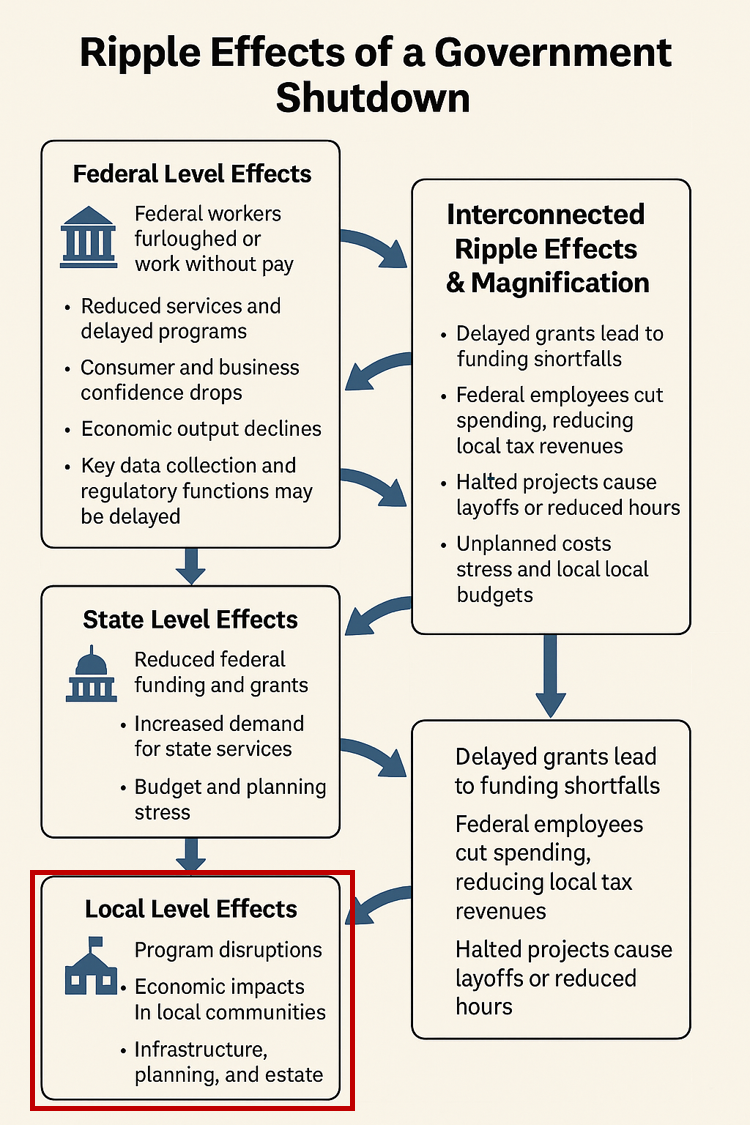
When the federal government shuts down, the effects ripple far beyond Washington, D.C., they reach every state and community, including right here in Pulaski County. Kentucky’s economy and public services rely heavily on federal programs, and many residents either work for or depend on agencies affected by a shutdown. It is estimated that roughly 30% of federal employees may be furloughed. That percentage is higher in in departments like the Dept of Health and Human Services where it is reported that about 41% of its workforce is furloughed.
In short, life in Pulaski County will not stop during an extended shutdown, but we will soon begin to feel the effects. Federal employees, contractors, hospitals, farmers, and many rural healthcare providers and nonprofits all play a role in the local economy, and any disruption in their federal funding stream has real, local consequences.
How Could This Affect Kentucky Workers and Local Businesses?
Kentucky has approximately 23,500 federal employees, many of whom serve in roles connected to defense, health, transportation, and agriculture. During a government shutdown:
- Essential federal employees: including active-duty military, law enforcement officers, Transportation Security Administration (TSA) staff, air traffic controllers, Veterans Affairs (VA) doctors and nurses, and National Weather Service forecasters must continue working without pay until funding resumes or until special measures are agreed upon and passed by lawmakers.
- Impact on essential employees: the drastic absence of a large percentage of the workforce leaves those deemed “essential” covering duties normally handled by colleagues, leading to longer hours, stress, and unavoidable delayed services.
The BIG Questions: What We Found
How Could the Shutdown Affect Healthcare in Kentucky and Pulaski County?
Kentucky ranks among the most federally dependent states for Medicaid funding.
- Medicaid eligibility will not change, but delays in federal reimbursements to the state could strain Kentucky’s budget.
- State government may need to temporarily cover costs, which can pressure funding for other priorities.
In rural areas like Pulaski County, where some healthcare services already operate on thin margins, delayed reimbursements or uncertainty can make a big difference. Even Lake Cumberland Regional Hospital may experience payment delays that affect operations and staffing.
What happens if service is rendered and billing is delayed? Will recipients be billed directly? We don't know the answer to that, but perhaps we need to prepare for similar scenarios as this shutdown lingers.
Are SNAP and WIC at Risk?
Governor Andy Beshear announced on October 20, 2025 that the federal government will not be sending money for these benefits for November as long as the shutdown continues. However, Kentuckians receiving SNAP benefits can continue as normal for October. The state will cover the TANF program through November using state funds but could not make assurances for December.
- Although October benefits are covered, benefits for November (or later) could be delayed or reduced if the shutdown continues.
- WIC is particularly vulnerable: the program is not an entitlement and is dependent on annual federal appropriations. Some experts estimate funding could run out in 1-2 weeks if the shutdown persists.
- If disruptions occur around the holidays, families relying on these benefits may face grater burdens. For example, increased food costs, more demand at food pantries and local nonprofits, and less buffer to absorb delays.
How Does This Affect Our Farmers?
Farmers across the U.S. were bracing for delayed payments and other ripple effects of this shutdown. KYCORN warned in the days before the shutdown that government programs through the U.S. Department of Agriculture would be impacted. Here is the list they shared:
- The Farm Service Agency (FSA), including state and local offices, will be closed
- Natural Resource Conservation Service offices will be closed
- Rural Development offices will be closed
- FSA will not be able to do sign-ups, acre reporting, processing, or payments
- The Risk Management Agency (RMA)will likely close
- RMA staff will not be able to provide guidance to insurers or farmers
- The Agriculture Marketing Service (AMS)will not publish various market and data reports during the shutdown
- The National Agriculture Statistics Service (NASS)is likely to delay or cancel various data releases and reports
- World Agriculture Supply and Demand Estimates (WASDE) reports could also be impacted
- The WASDE report is widely regarded as the gold standard in agriculture market intelligence, providing producers, agribusiness, and policymakers with essential insights to anticipate trends, manage risk, and inform policy and budget decisions.
- Food and nutrition programs will likely continue to operate normally (these are at risk with an extended shutdown)

Image by Jonathan Petersson | Pexels
How Could This Affect Nonprofits, Social Services, and Food Assistance?
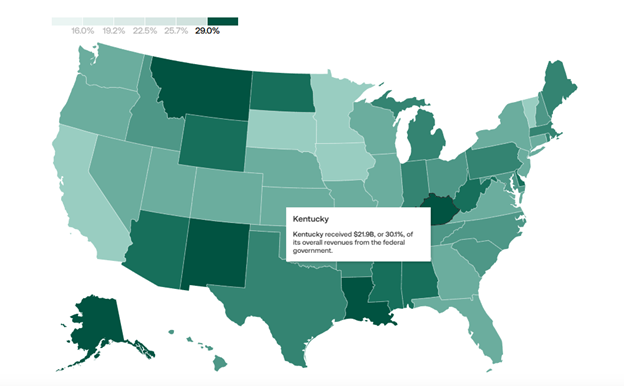
Many Kentucky nonprofits depend on federal grants, contracts, and food supplies to serve families in need.
- For example, food banks that receive distributed food comes from the U.S. Department of Agriculture (USDA). Noted above.
- Disruptions to USDA programs could reduce food availability or delay deliveries to regional partners and local pantries.
In Pulaski County, this could affect organizations that rely on federal food programs or grants for housing, youth services, or disaster preparedness.
If funding or food shipments are delayed, shelters, food pantries, and community service organizations may be forced to scale back or ration assistance temporarily. This is where community support will be essential.
Image provided by USAFacts
How Could This Affect Infrastructure and Transportation?
Kentucky’s Transportation Cabinet depends heavily on federal highway funds for maintaining and improving roads such as I-75, the Cumberland Parkway, and U.S. 27.
- A freeze on federal grants could delay road, bridge, and public works projects.
- Local governments (including Pulaski County Fiscal Court and the City of Somerset) might have to pause construction or use reserve funds to keep work moving until federal money resumes.
Federal projects tied to the Army Corps of Engineers, some rural utilities, and broadband expansion as it relates to the FCC, may also face interruptions or slow approvals.
Other Impacts
Here in Pulaski County, that means local residents employed at VA clinics, the Daniel Boone National Forest and the Park Services, or other federally supported offices may experience temporary loss of income. Sources say most services at the VA Clinic in Somerset are not impacted by the shutdown, but some services may be temporarily suspended.
Even short disruptions can ripple through the local economy. When paychecks pause:
- Local small businesses and restaurants may see decreased spending.
- Contractors and suppliers who rely on federal projects may experience delayed payments or work stoppages.
- Tourism-related businesses near Lake Cumberland and the Daniel Boone National Forest could feel declines if federal recreation areas scale back operations.
The longer a shutdown continues, the more these economic effects accumulate, especially in rural economies where federal spending plays a stabilizing role.
What Will Continue During the Shutdown (so far)
Even during the shutdown, some critical services continue operating, including:
- Social Security and Medicare benefits
- Postal Service operations
- Active military and law enforcement activities
- Air traffic control and TSA
- Weather forecasts and emergency alerts
- Essential medical care for veterans and active-duty personnel
However, many federal offices will close or operate with minimal staffing, so citizens should expect slower processing times for passports, small business loans, tax inquiries, and certain federal permits.
What You Can Do
Make Your Voice Heard
Your elected representatives need to hear how this impacts you, your family, and your livelihood.
Contact your U.S. Senators and House Representative to share your experience and concerns. Be respectful, brief, and specific about how the shutdown affects Pulaski County and rural Kentucky.
You can reach them by phone, email, or through their official websites:
📞 Senator Mitch McConnell: www.mcconnell.senate.gov
📞 Senator Rand Paul: www.paul.senate.gov
📞 Representative Hal Rogers (KY-5): www.halrogers.house.gov
Watch Senate Proceedings to hear exactly what is being said: U.S. Senate: Floor Proceedings
Reach out to your local nonprofits and ask how you can help.
How Your Local Government May Be Able to Help?
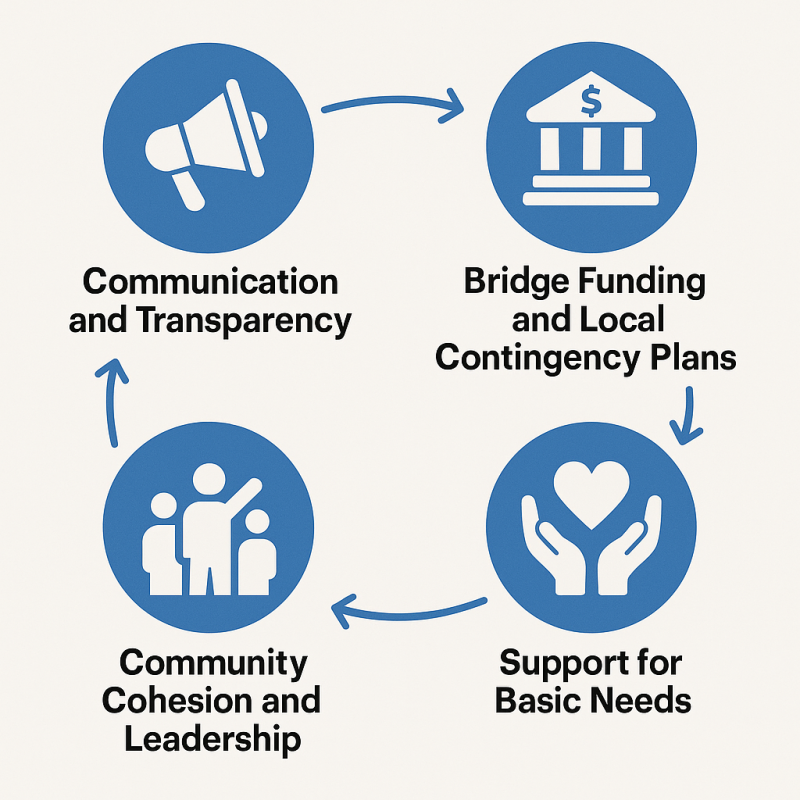
Federal programs, employees, contractors, hospitals, and nonprofits all play a role in our local economy, and any disruption in their funding has real, local consequences. As we stated at the beginning, short shutdowns cause inconvenience; longer ones can create serious hardship, particularly in rural communities where every paycheck and service counts.