By Michael R. Grigsby, Editor | Somerset-Pulaski Advocate
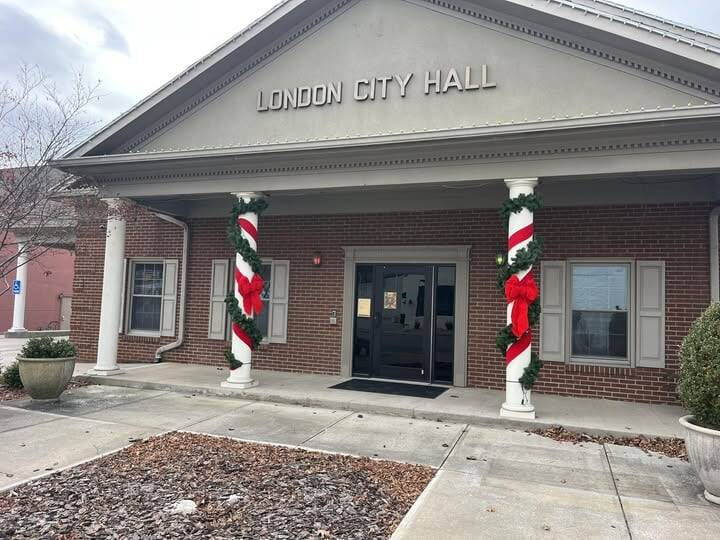
Image London City Hall (C) 2026 All Rights Reserved
LONDON, KY (SPA)---An ongoing federal lawsuit filed in the U.S. District Court for the Eastern District of Kentucky has drawn attention to the intersection of local politics, public participation, and police authority, raising questions that extend beyond one city council meeting in London, Kentucky.
The case, Estep v. Wolfe et al., centers on allegations by Don Estep, 77, who claims he was unlawfully removed and injured during a December 2025 London City Council meeting because of his political views. City officials and police officers named as defendants deny wrongdoing, and the case remains in its early procedural stages.
What follows is an objective examination of the allegations, the legal claims asserted, and the potential outcomes, based on court filings and established law
The Incident at the Council Meeting
According to the complaint, Estep attended a regularly scheduled City Council meeting on December 1, 2025, accompanied by his wife. He describes himself as a frequent attendee who rarely speaks during meetings.
The lawsuit alleges that the meeting occurred amid a sharp political divide in London between supporters of the mayor and supporters of the city council. Estep identifies himself as aligned with the latter. During the public comment portion of the meeting, tensions reportedly escalated when another attendee is alleged to have made remarks critical of council supporters. Estep claims he responded verbally but did not act disruptively.
According to the filing, multiple police officers approached Estep, and the mayor allegedly instructed officers—over a microphone—to remove him from the meeting. Estep asserts he was escorted out without a warning, while other attendees expressing opposing views were not removed.
Once outside, Estep alleges that officers used physical force, including pulling his arms behind him, resulting in a shoulder injury according to the complaint. He further claims he was threatened with arrest if he did not immediately leave the premises, despite waiting for his wife, who had the car keys.
City officials have not publicly responded to the detailed allegations, and no findings of fact have been made by the court.
The Legal Claims
In Estep’s lawsuit, he makes both federal and state claims, primarily under civil rights law.
First Amendment Allegations
The complaint asserts that Estep was removed because of his political viewpoint, constituting:
- Viewpoint discrimination in a public or limited public forum, and
- Retaliation for protected political speech.
Courts have long held that government bodies may impose decorum rules at public meetings, but they may not enforce those rules selectively based on political viewpoint. Whether Estep’s conduct crossed the line into disruption—or whether enforcement was uneven—will be central to his allegations.
Fourth Amendment Allegations
Estep also alleges excessive force, claiming police actions were unreasonable given his age, health conditions, and lack of resistance. Under U.S. Supreme Court precedent, police use of force must be “objectively reasonable” based on the circumstances confronting officers at the time. The reasonableness of force used during crowd-control situations is often highly fact-specific.
Municipal Liability
The lawsuit names the City of London itself, arguing that the mayor’s alleged directive constituted official policy. Municipal liability under federal law requires proof that a constitutional violation resulted from an official policy or a decision by a final policymaker. Courts frequently scrutinize these claims closely, particularly when they are based on a single incident.
State Law Claims
The complaint also includes Kentucky-law claims for assault and battery, alleging both intimidation and unwanted physical contact. These claims may face challenges due to governmental and official immunity, doctrines that often protect cities and officers performing discretionary functions.
The Defense Perspective
Defense attorneys in similar cases typically argue that:
- Officers acted to maintain order during a contentious meeting.
- Any force used was minimal and lawful under the circumstances.
- Removal was based on behavior, not viewpoint.
- Officers are shielded by qualified immunity, which protects public officials unless they violate clearly established law.
- The city itself cannot be held liable without evidence of an unlawful policy or pattern.
Courts often resolve many of these issues before trial, through motions to dismiss or for summary judgment.
Possible Outcomes
Legal experts note several potential paths forward:
- Early dismissal of some defendants or claims, particularly those lacking specific allegations.
- Narrow survival of core claims, such as excessive force or First Amendment retaliation against individual officials.
- Settlement, which is common in civil rights cases involving disputed facts.
- Trial, if factual disputes—especially regarding conduct and intent—cannot be resolved by the court.
Importantly, the filing of a lawsuit does not establish liability. All defendants are presumed to have acted lawfully unless proven otherwise.
Broader Implications
Cases like this often resonate beyond the parties involved. Public meetings are intended to foster civic engagement, but they also require order. Courts are frequently asked to balance:
- Free speech rights, especially political speech,
- Government authority to manage meetings, and
- Police discretion in volatile public settings.
The outcome of Estep v. Wolfe et al. may offer guidance on how far local officials can go in responding to political conflict during public meetings—particularly when enforcement decisions intersect with law enforcement action.
Status of the Case
As of this writing, the case is pending, and no rulings on the merits have been issued. Further proceedings will determine whether the allegations proceed to discovery, trial, or resolution through other means. This article is based solely on publicly filed court documents. Allegations described herein have not been adjudicated, and all parties are entitled to the presumption of innocence and lawful conduct.
*******
(C) 2026 Somerset-Pulaski Advocate. All Rights Reserved
Add comment
Comments